
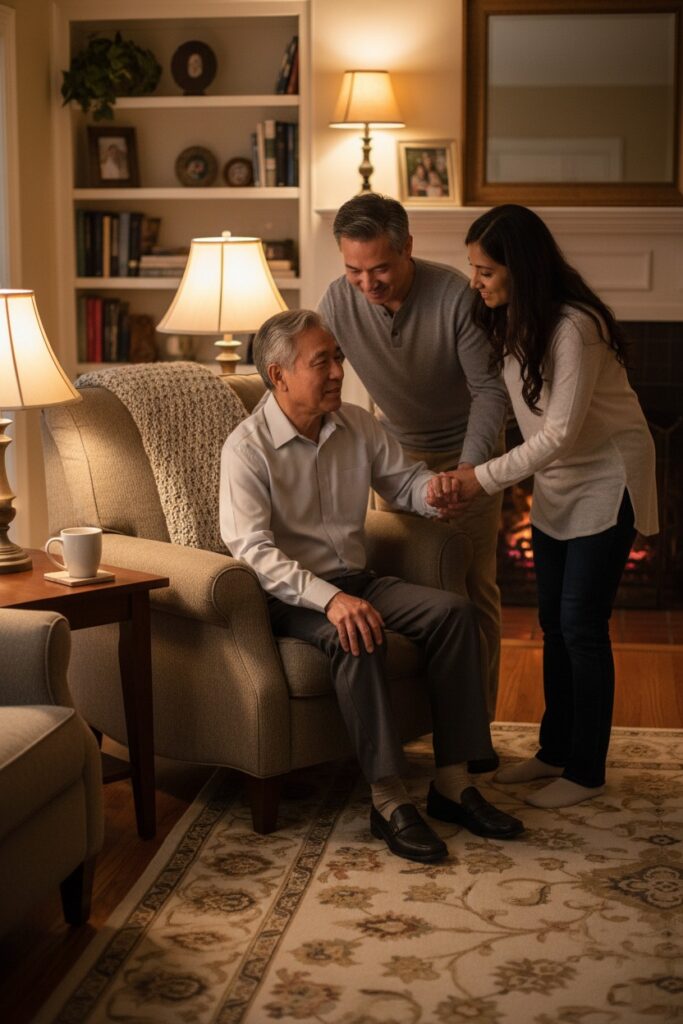
Years ago, I sat beside my father in a packed arena at San Diego State University, waiting for the Dalai Lama to walk onto the stage. I remember the hum of thousands of voices going quiet all at once. I remember my father beside me, still and attentive in a way I rarely saw him as before. I remember thinking, without quite knowing why, that this afternoon was going to matter.
It did. Not in a dramatic way, and not all at once. But that afternoon planted something in me that grew slowly over the years, and it bloomed fully when caregiving became part of my daily life. When I found myself caring for aging parents, first as a daughter and later as a daughter in law, I kept returning to what I heard that day I kept returning to the Buddhist books for caregivers that carried those same teachings into my hardest and most tender seasons.
This is the story of that afternoon, what it taught me about caring for elderly loved ones at home, and the five books I recommend to anyone who wants a little more peace in their caregiving heart.
Note: This post contains affiliate links, including Amazon. I may earn a small commission if you make a purchase at no extra cost to you. Read my full Affiliate Disclosure.
A Daughter, a Father, and a Borrowed Afternoon
My father was not a man who talked easily about the inner life. Like so many of his generation, he showed love through working hard, through showing up, through fixing things, and being the provider. At the time when we found ourselves together at that talk, he was semi-retired and had recently showed interest in Buddhism looking through books from time to time. This was a rare afternoon where we sat side by side with nothing to fix and nowhere to be.
We were a Catholic family, my father and I both raised in the rhythm of Sunday Mass, rosary beads, incense, and the quiet certainty of ritual. Faith in our house had a shape you could touch, candles you could light, words you knew by heart before you understood them. So there was something almost daring about the two of us going to hear a Buddhist monk speak, like visiting a neighbor’s home and admiring how differently they set their table.
The Dalai Lama spoke simply. He laughed often, which surprised me and he kept returning to one idea, that compassion is not a lofty spiritual achievement reserved for monks. It is a daily practice, available to anyone, and it begins with the people closest to us. He said that if we want others to be happy, we should practice compassion, and if we want to be happy ourselves, we should practice compassion. The same answer to both questions.
What disarmed us both was that he never asked anyone to trade one faith for another. He has long encouraged people to stay rooted in the tradition that raised them and he spoke of compassion as the common ground beneath every faith. Sitting there, I realized I had heard this before. I had heard it in the Gospels of my childhood, in every homily about loving your neighbor, in my mother’s rosary whispered for people she would never meet. It was the same well, drawn from a different side.
I glanced at my father during that part. He was nodding, just barely, and I think he recognized it too. Years later, especially in his older age of life, Buddhist teachings would become a source of genuine peace for him alongside his Catholic faith. But that afternoon, neither of us knew what was coming. We only knew that something true had been said out loud and that we had heard it together.
What Compassion Really Asks of Us
When I started caregiving, I discovered how easy it is to confuse caring with doing. There is always something to do. Medications to sort, meals to plan, appointments to track, helping, assisting. I threw myself into all of it and still went to bed many nights feeling like I had failed the people I loved and laying awake at night in despair thinking how can I help a loved one survive if I’m drowning.
What the Dalai Lama’s teaching slowly untangled for me is that compassion is not the same as productivity. Compassion is presence. It is sitting with your mother while she works through the same story for the third time and choosing to listen as if it were the first. It is noticing that your father in law is frightened, not difficult. It is understanding that the small things our elderly parents appreciate most are rarely the tasks we exhaust ourselves completing. They are the moments we simply stay.
There is a second part of the teaching that caregivers need even more. Compassion includes you. In the Buddhist view, you are not separate from the circle of beings who deserve kindness. If you are running on empty, resentful and depleted, that is not devotion. That is suffering, and it deserves the same gentle attention you give everyone else. Organizations like the Family Caregiver Alliance and the AARP caregiving resources say this in practical language, but the Dalai Lama said it in spiritual language first, and for me that is what finally made it land.
How That Afternoon Shows Up in My Caregiving Now
Impermanence sounds like a heavy word, but in a caregiving home it becomes strangely comforting. Buddhist teaching holds that everything changes, that nothing stays, and that this is precisely what makes each ordinary moment precious. Once I truly absorbed that, mealtimes changed. Slow walks to the mailbox changed. Even the frustrating days changed, because I stopped measuring them against some imaginary perfect day and started receiving them as they were.
I am more patient with repetition now. I am quicker to sit down and slower to jump up. When grief arrives early, as it does for so many of us who watch a parent change before our eyes, I let it come instead of pushing it away. The teachings gave me permission to hold sorrow and love in the same hand, and caregiving asks us to do exactly that, every single day.
None of this made me a perfect caregiver. There is no such thing. But it made me a more peaceful one, and our loved ones feel the difference in us long before they can name it.
Five Buddhist Books for Caregivers of Elderly Loved Ones
Over the years I have gathered a small shelf of books that have shaped my foundation of caregiving and these five are the ones I return to most. You do not need to be Buddhist to receive what they offer. I read them as a woman raised Catholic and they never once asked me to be anything else. You only need an open heart and, on some days, ten quiet minutes before the house wakes up.
1. The Art of Happiness by His Holiness the Dalai Lama and Howard Cutler
If you read only one book on this list, let it be this one. Written as a series of conversations between the Dalai Lama and an American psychiatrist, it bridges Eastern wisdom and Western daily life with warmth and humor. Its central idea, that happiness is cultivated through compassion rather than circumstance, is exactly the medicine a weary caregiver needs. I have read my copy so many times the spine has gone soft.
2. The Book of Joy by His Holiness the Dalai Lama and Archbishop Desmond Tutu
Two elderly friends, both intimately acquainted with suffering, spend a week together talking about how joy survives hardship. What makes this book so special for caregivers is that it never pretends pain is not real. Instead it shows two men in their eighties laughing, grieving, and choosing joy anyway. Reading it feels like sitting at the kitchen table with the wisest grandparents imaginable.
3. The Compassionate Life by His Holiness the Dalai Lama
This slim volume gathers four of the Dalai Lama’s most accessible teachings on compassion, including practices for extending kindness in genuinely difficult situations. It is short enough to finish in a weekend and gentle enough to read in small pieces on the hardest days. For caregivers navigating strained family dynamics or old wounds with the very parent they now care for, this little book is quietly life changing.
4. When Things Fall Apart by Pema Chödrön
Pema Chödrön is an American Buddhist nun whose plain spoken honesty has comforted millions. This book is for the caregiver in crisis, the one lying awake after a diagnosis, a fall, or a night that changed everything. Her counsel is to stop running from the fear and lean gently toward it, because that is where healing begins. She writes that things come together and fall apart, and that the healing comes from making room for all of it, the grief and the relief and the joy.
5. Being with Dying by Joan Halifax
Joan Halifax is a Zen teacher who has spent decades sitting with dying people and training healthcare workers in compassionate care. This book is for the later seasons of caregiving, the ones we do not like to think about until we must. She teaches fearlessness not as the absence of fear, but as the willingness to stay present anyway. When my family needed it, this book helped us show up with steadier hearts. It is a profound companion for anyone walking a parent home.
6. Bonus Recommendation: Heart to Heart by the Dalai Lama
This bonus recommendation is a lovely one for the whole family. Heart to Heart by the Dalai Lama is a gentle collection of reflections on kindness, compassion, gratitude, and inner peace. Its simple, accessible messages make it meaningful for both adults and children, making it an excellent choice for families in the sandwich generation who are balancing the needs of aging parents and growing children. Reading a passage together at bedtime can create a calming daily ritual, encourage thoughtful conversations, and remind both parents and children of the importance of empathy, resilience, and caring for one another.
Bringing It Home
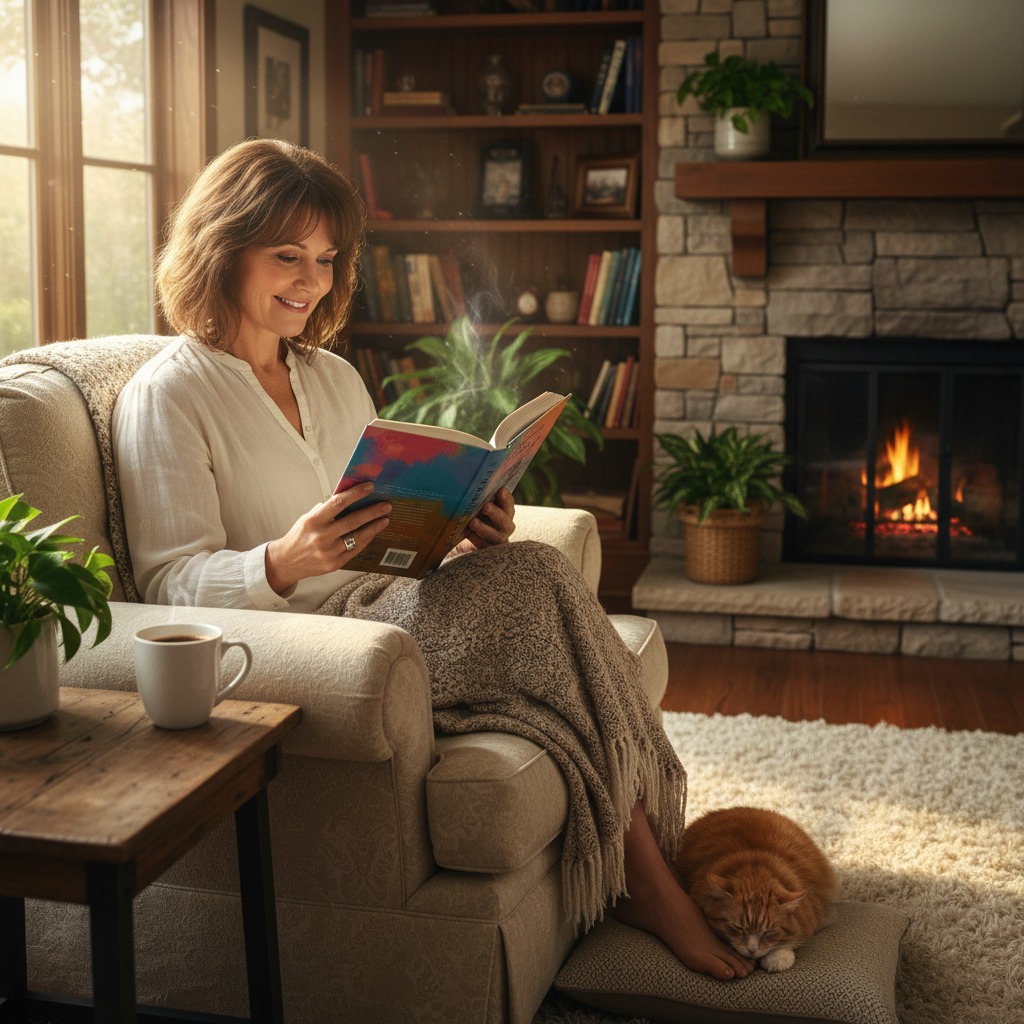
My father found real peace in Buddhist teachings before the end of his life, and he found it without ever setting down the Catholic faith that raised him. The rosary and the teachings on compassion sat comfortably together in him, the way two old friends can share a bench without needing to agree on everything. I believe the seed of that peace was planted on our afternoon at San Diego State, sitting shoulder to shoulder in a crowd of strangers who all went quiet at the same moment. I could not have known then that I was watching my future caregiving philosophy take shape beside me.
You do not need an arena or a famous teacher to begin. You only need a quiet corner, one of these books, and the willingness to believe that compassion, for your loved one and for yourself, is the truest form of care there is. Rooted in love. Guided with care. That is not just our tagline. After all these years, it is simply what the Dalai Lama taught me, translated into the language of home.
If one of these books finds its way to your nightstand, I would love to hear which one spoke to you. And if you would like more encouragement like this, join our email family so we can walk this caregiving road together.
By Ceci L. x
Leave a Reply