
Understanding what you feel, why you feel it, and how to carry it with grace

There is a particular kind of love that only emerges in caregiving. It is quiet, unglamorous, often exhausting, and occasionally pierced through with a beauty so sharp it catches you off guard. It is the love of watching someone sleep and feeling grateful they are still here. The love of learning, late in life, things about your parent you never knew. The love that shows up not in grand gestures but in the ten thousandth small act: the glass of water, the adjusted pillow, the hand held in a hospital room at two in the morning. If you are on this journey right now, this guide to caregiver emotional support is written for you.
But that love does not arrive alone. It arrives with grief, and frustration, and guilt, and fear, and a kind of weariness that sleep does not always fix. It arrives alongside a shifting of roles so profound it can feel disorienting. You are still their child and yet you are also, somehow, their keeper now.
The emotional journey of caring for aging parents is one of the most complex inner landscapes a person can inhabit. It is rarely spoken about with the honesty it deserves. This article is an attempt to do exactly that, to name what so many caregivers feel but rarely say aloud, and to offer some understanding and companionship for the road.
Caring for a parent is one of the most profound acts of love a person can offer. It is also one of the most quietly difficult.
The Reversal No One Fully Prepares You For
Long before you became a caregiver, you were a child. You looked to your parents for safety, for answers, for the particular comfort of knowing that someone wiser and stronger was in charge. That dynamic shapes us deeply, often more deeply than we realize, until the day it begins to reverse.
The moment you first help a parent with something they used to do effortlessly, drive themselves, manage their medications, remember the name of a familiar street, then something shifts. It is subtle at first. Then, gradually, it is not subtle at all. The person who once held you is now the one being held.
This reversal is not simply logistical. It is existential. It forces a reckoning with your own place in the arc of a life, with the fact that your parents are aging, which means time is passing, which means everything is passing. Many caregivers describe a quiet grief that begins not at death but here, in this early recognition of change. That grief is real. It is also, in a strange way, a measure of the depth of the love.
Give yourself permission to feel the weight of this shift without trying to immediately resolve it. It is not a problem to be solved. It is a transition to be moved through…slowly, imperfectly, and with as much tenderness as you can muster.
Grief That Arrives Before Loss
One of the most disorienting aspects of caring for an aging parent is the grief that comes before any death has occurred. This is called anticipatory grief, and it is as real and as valid as any other form of mourning, though it is far less often acknowledged.
You may grieve the parent your mother or father used to be: the sharp mind that is now slower, the body that was once strong and is now frail, the voice that used to fill a room that now sometimes trails off mid-sentence. You may grieve the relationship you had, the one that existed before illness and dependency entered the picture. You may grieve the future you imagined: retirement trips not taken, conversations that will likely never happen, the version of your parents growing gracefully old that doesn’t quite match the reality in front of you.
Sometimes, in the particular quiet of a hard night, you may grieve for yourself. For the years of your own life that caregiving is reshaping. For the plans set aside, the freedoms curtailed, the version of your own future that has been quietly rewritten.
None of this means you love your parent any less. It means you are human, and that you are paying attention. Grief is not disloyalty. It is the other side of love, the shadow it casts when we know, somewhere deep in ourselves, that what we love will not last forever.
If the grief feels overwhelming or unmanageable, please reach toward support. A grief counselor, a therapist who works with caregivers, or even a caregiver support group can provide the kind of witnessed understanding that transforms isolation into something more bearable.
Anticipatory grief is not weakness or ingratitude. It is love, held alongside the knowledge of impermanence.
The Complicated Truth About Guilt
Ask almost any family caregiver what emotion surprises them most, and guilt rises to the top with remarkable consistency. Not just occasional guilt, persistent, low-grade guilt that colors even the good days. The guilt of not doing enough. The guilt of doing it imperfectly. The guilt of needing a break. The guilt of feeling, in a weak moment, resentful or impatient. The guilt of living your life while they are declining.
Caregiver guilt is worth examining carefully because not all of it is useful and some of it is actively harmful. There is a kind of guilt that serves as a moral compass: when you snap at your parent out of exhaustion and feel bad about it, that feeling is appropriate feedback, a signal to repair and do better. That kind of guilt, acknowledged and acted upon, is healthy.
But there is another kind of guilt, the ambient, impossible-standard variety that is not feedback. It is a story you are telling yourself about what a perfect caregiver would do compared to what you are actually doing. That story is almost always false. The standard it holds you to is one no human being could meet and it costs you energy you cannot afford to spend.
A question worth asking: Would I judge another caregiver for doing exactly what I just did, or feeling exactly what I just felt? In most cases, the answer is no. We are invariably more compassionate toward others than toward ourselves, try to extend to yourself even a fraction of the grace you would offer a friend in your position.
You will not be a perfect caregiver. No one is. You will have days when you are tired and short-tempered and less than your best self. You will make decisions that turn out to be wrong. You will miss things. So will every other caregiver who has ever loved someone through decline. Imperfection in caregiving does not disqualify the love. It simply confirms the humanity.
Anger, Frustration, and the Feelings You’re Afraid to Admit
Among the emotions that caregivers most rarely speak aloud, anger sits near the top. It feels disloyal and unkind. How can you be angry at someone who is sick, who is aging, who did not choose this any more than you did ? Yet, the anger comes.

It may arrive as frustration at repeated questions, at stubbornness, at a parent who refuses to accept help or insists on doing things their way long past when that is safe. It may arrive as a deeper, more diffuse anger, at the situation itself, at the unfairness of it, at the way this season of your life has arrived without invitation and reshaped everything. It may occasionally, painfully, arrive as anger at the person you are caring for, for needing so much, for not getting better, for being the center of a storm that has swept up your entire life.
These feelings are uncomfortable. They are also entirely normal. Acknowledging them to yourself, in a journal, with a therapist or trusted friend is far safer than pretending they don’t exist. Suppressed anger doesn’t disappear. It resurfaces as irritability, as cynicism, as a creeping resentment that can poison the very care relationship you are trying to protect.
You do not have to act on these feelings to acknowledge them. Feeling anger at a situation is different from being an angry person and naming what you feel, without judgment, is usually the first step in releasing its hold on you.
You are not a bad child for feeling frustrated. You are a tired person in a hard situation. Those are very different things.
The Unexpected Gifts
It would be incomplete and unfair to write about the emotional journey of caregiving without speaking honestly about what it gives as well as what it costs.
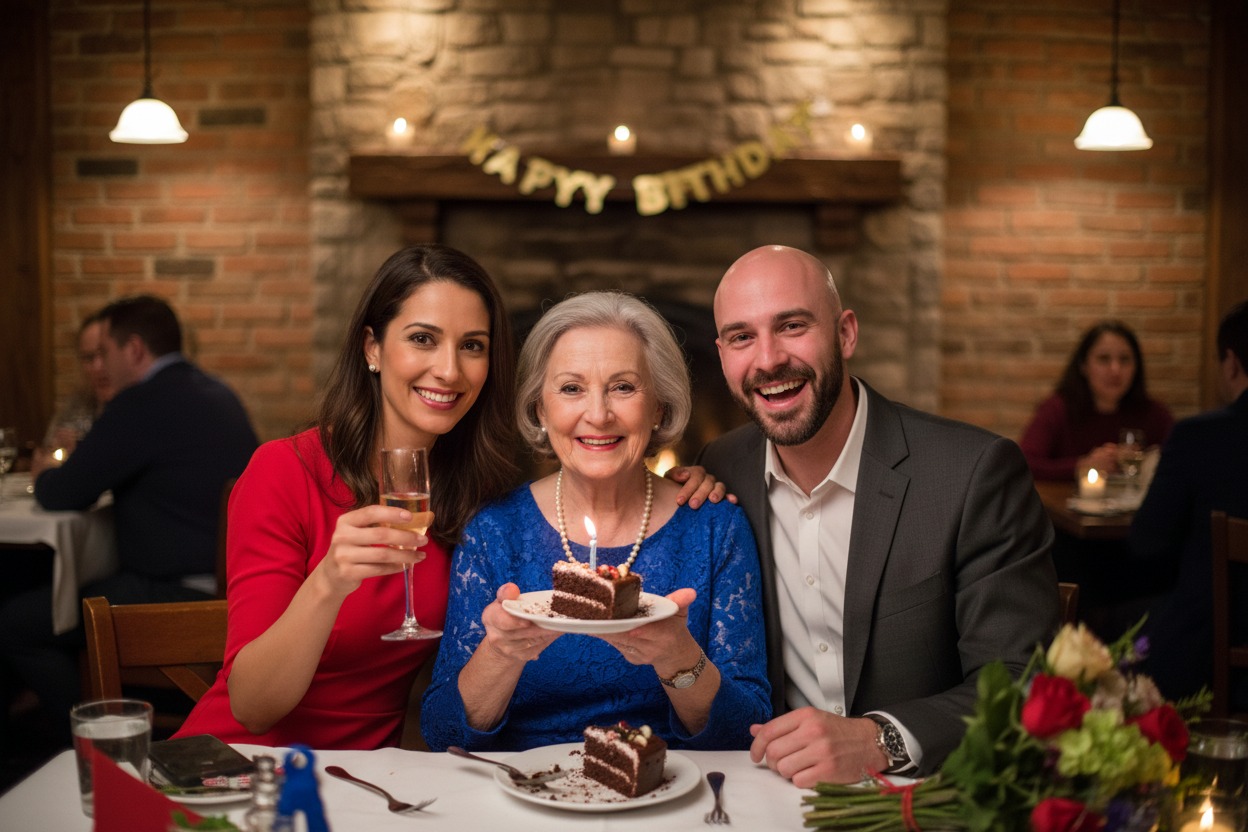
Many caregivers describe a deepening of the relationship with their parent that they could not have predicted. The conversations that happen in quiet hospital rooms and slow evenings at home, about regrets, about love, about what mattered and what didn’t can reach depths that years of ordinary life never touched. You may learn things about your parent’s life, their fears, their tenderness, that you never knew before. You may find, in caring for them, a closeness that all those years of ordinary living somehow never quite produced.
There is also, for many caregivers, an unexpected discovery of their own capacities. You find out you can handle more than you thought. You find resources in yourself…patience, creativity, resilience that daily life never called for. The person you are when you are caring for your parent may surprise you.
Meaning is real. Many caregivers, even those who found the experience profoundly difficult, describe it as one of the most meaningful chapters of their lives. Not because it was easy but because it mattered. Because they showed up for someone they loved in the most fundamental way and that showing up, day after day, imperfectly and persistently is the definition of devotion.
Let yourself receive these gifts when they come. The quiet morning when your parent is comfortable and the light is gentle. The moment they take your hand and squeeze it. The story you have never heard before that surfaces on an unremarkable Tuesday. These are not small things. They are, in many ways, the whole point.
The Sibling Dimension
For those with brothers or sisters, caregiving adds another emotional layer: the complicated terrain of doing this with or sometimes instead of siblings. Few family dynamics are as reliably tension-generating as the unequal distribution of caregiving responsibilities and few old wounds open as reliably as those that surface when adult siblings must navigate their parents’ decline together.

If you are carrying more of the caregiving weight than your siblings, resentment is natural. If you are the sibling who lives farther away or contributes less, guilt may be your companion instead. Either way, these dynamics deserve honest conversation early and often.
It helps to approach these conversations not with grievance lists but with genuine curiosity: what can each person actually contribute, given their circumstances? What does your parent actually need most right now? How can the load be distributed in ways that are sustainable for everyone? Answers won’t always be satisfying, but the conversation itself held with the intention of solving a shared problem rather than scoring points can prevent the kind of fractures that sometimes outlast the caregiving season itself.
If direct conversation feels impossible, a family mediator or social worker can provide a structured, neutral space for these discussions. This is not an admission of family failure. It is a recognition that some conversations are hard enough to benefit from a little help.
When You Are Also Still Their Child

Here is something that gets said too rarely: no matter how much you are doing for your parent, you are still their child. You still carry the history of that relationship, its warmth and its wounds, its patterns and its particular tenderness. You do not stop being their child when you become their caregiver, and the feelings that belong to that older relationship do not go away.
For some people, caregiving offers an unexpected opportunity for healing, a chance to build closeness that wasn’t there before, to have conversations that were always avoided, to arrive at a kind of peace with a relationship that was complicated. For others, caregiving means caring for a parent with whom the relationship was painful, distant, or damaging, and that brings its own particular complexity.
If you are caring for a parent with whom you have a difficult history, you deserve acknowledgment for what you are doing. The fact that a relationship was hard does not mean you owe nothing; it also does not mean you owe everything. Caring for a difficult parent while also protecting your own emotional health is a delicate balance, and navigating it may require support, from a therapist, from trusted people in your life, from honest self-examination about what you can genuinely offer and what you cannot.
Your limits are allowed. Setting boundaries in a caregiving relationship, even with a parent, is not abandonment. It is an act of honesty about what is sustainable. A caregiver who runs completely empty helps no one.
You are their child and their caregiver, carrying both at once. That double weight deserves to be seen and honored.
Where to find Caregiver Emotional Support When You Need it Most
Caregiver burnout is not a character flaw. It is a clinical reality. A state of physical, emotional, and mental exhaustion that results from sustained, high-demand care giving without adequate support or recovery. It is extraordinarily common, and it does real harm: to the caregiver’s health, to the quality of care they can provide, and to the relationship at the center of it all.
The most loving thing you can do for your parent is also take care of yourself. Not as a reward you earn after everything else is done, but as a practice you maintain throughout. Sleep. Movement. Food that nourishes you. Time with people who restore you. Some activity or interest that remains entirely your own. These are not luxuries. They are the infrastructure of sustainable care.
If you are in a season where genuine self-care feels impossible, where there is simply no time, no help, no margin, that is a signal, not a permanent state. It is a signal that the current arrangement is not sustainable and that something needs to change: more help brought in, a respite period arranged, a family conversation had about redistributing the load. Please take that signal seriously. Caregivers who ignore it do not become better caregivers. They become depleted ones.
Reach toward support whenever it is available. Caregiver support groups, in person or online, offer something uniquely valuable: the particular relief of being understood by someone who does not need the situation explained. Therapy offers a space to process emotions that have nowhere else to go. Both are worth pursuing.
When Caregiving Ends And What Comes After
There comes a point, through recovery, through transition to a care facility, or through death, when the intensive season of caregiving ends and that ending, whenever and however it arrives, carries its own emotional weight.
If your parent has died, you are navigating grief in its most straightforward form and also, often, something more complex. Caregivers who lose the person they were caring for sometimes describe a disorienting period in which the structure that organized their days is suddenly gone. The role that consumed so much of them has ended, and with it comes a strange kind of emptiness alongside the grief. This is normal. The transition out of an intense caregiving season is a genuine life adjustment, not simply the presence or absence of a feeling.
Many caregivers also describe a complicated mix of emotions at this stage: relief, which arrives alongside grief and sometimes produces its own guilt. The relief is not callousness. It is the natural response of someone who has watched a loved one suffer, or who has sustained enormous effort over a long period of time. It is allowed, and it does not diminish the love.
Give yourself time and space to find yourself again after caregiving. Reconnect with the parts of your life that were set aside. Be patient with the process of re-establishing rhythms, relationships, and a sense of your own direction and consider whether some form of support counseling, a grief group, time with people who knew both you and your parent might help you through this transition.
You Are Changed and That Is Not a Small Thing
People who have cared for aging parents are rarely quite the same afterward. They have seen things about love and time and the human body that most people don’t encounter until much later or sometimes never. They have developed a tolerance for uncertainty, a capacity for sustained effort, and an understanding of what it means to truly show up for someone, that changes the texture of who they are.
You may not be able to see that yet, especially if you are still in the midst of it. But somewhere inside the exhaustion and the complexity and the love, something is being shaped in you that matters. A patience you didn’t know you had. A tenderness for fragility. A deeper understanding of what it means to be human, finite, dependent, and held, one way or another, by the people who love us.
You are doing something that has been done by sons and daughters across every culture and every era of human history and you are doing it in your own particular way, with your own particular love, for your own irreplaceable parent. That is not a small thing. It may, in the end, be one of the largest things you ever do.
Be gentle with yourself as you do it and know that the love you are giving, even imperfectly, even on the hard days, especially on the hard days, is being received.
—
Support for Caregivers
The Family Caregiver Alliance offers wonderful resources for anyone navigating this season of life. Family Caregiver Alliance
You are not alone in feeling this way. AARP research shows that family caregivers often experience a complex mix of love, grief, exhaustion, and profound meaning all at once. AARP Caregiver Support
If you’d like to know more about why I started this blog and what inspired this journey, you can read my story here. First Blog Post
Leave a Reply